



Songkran Festival: History, Traditions & Meaning of Thailand's Water New Year
Picture yourself on Silom Road in Bangkok, April 13. Water comes at you from every angle. Strangers laugh, drench each other, completely at ease.
This is Songkran Festival.
Thai families rise before sunrise to visit temples. Monks receive offerings. Younger family members offer blessings to elders. This is not a water fight - it is Thailand's most sacred New Year celebration.
Go in well-prepared and you will witness something truly extraordinary. Bring a Matrix Cellular Services and a waterproof pouch. Both are non-negotiable.
This guide covers Songkran's history, rituals, best locations, and practical advice. Indian travelers, read every section before you book.
The Ancient Origins Nobody Tells You About Before You Visit Thailand
What the Word Songkran Actually Means in Sanskrit
Most visitors arrive with no idea what the word itself even means. Songkran comes from the Sanskrit word Sankranti, which translates to astrological passage or transition.
That transition is precise and astronomical. On the traditional Thai solar calendar, the sun moves into Aries. Ancient scholars mapped this shift with careful calculation. April 13 marks this cosmic crossing every single year. That's exactly why Songkran's dates stay fixed while lunar holidays wander around the calendar.
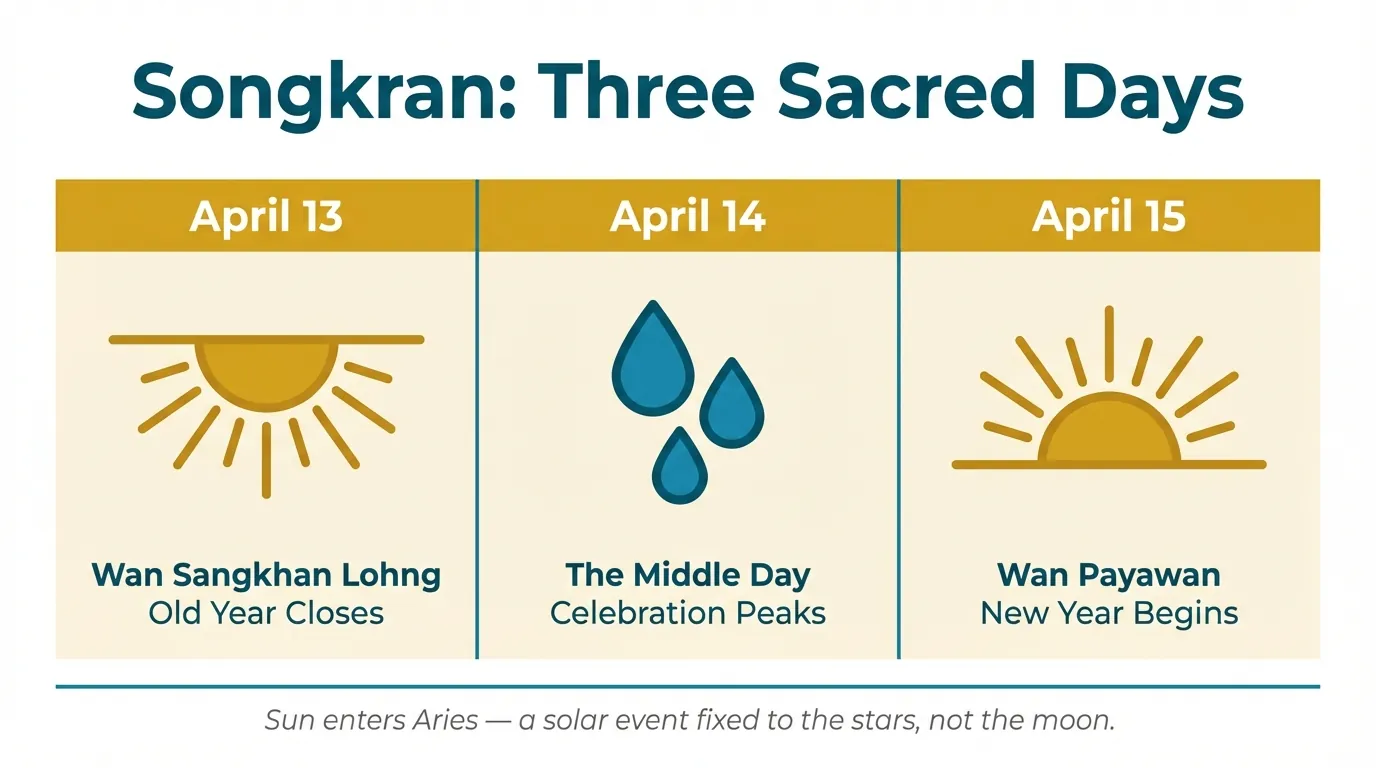
Songkran is a solar event. Full stop.
The traditional Thai solar calendar governs Songkran's timing - not the official calendar used for government business. Two separate systems, running side by side. Thailand formally adopted the Buddhist Era calendar centuries ago. Songkran, though, has always answered to the stars rather than administrative convenience.
- April 13 - Wan Sangkhan Lohng, the day the old year closes out
- April 14 - the middle day of the festival
- April 15 - Wan Payawan, when the new year officially begins
How a 700-Year-Old Tradition Survived Into the Modern World
Songkran has historical roots that can be traced back to the Sukhothai kingdom, which flourished in the 13th century.. That's over 700 years of unbroken celebration.The festival carried through the Ayutthaya period without skipping a beat. The Bangkok period layered on royal ceremonies and grander processions. Thailand was never colonized, which kept the tradition from being dismantled or diluted. Modernization brought water guns and foam machines, but the sacred core held firm. In 2023, UNESCO added Songkran to its list of Intangible Cultural Heritage of Humanity., a formal acknowledgment of what Thais already understood.
Seven hundred years. One festival. Still standing.
The Sacred Rituals That Happen Before the Water Guns Come Out
The water fight starts in the afternoon. The sacred part begins at dawn.
Why Pouring Water Over a Buddha Statue Is the Most Important Act of the Festival
On the morning of April 13, Thai families go to temple first. They carry scented water mixed with jasmine and rose petals, and this water gets poured over sacred Buddha images. The act symbolizes washing away bad luck and sin from the previous year. An offering and a prayer, folded into one gesture.
The ritual happens before any street celebrations begin. Temples across Thailand fill with worshippers holding flowers and incense. The air carries jasmine and sandalwood. Monks chant in the background while families queue patiently. This is not a tourist attraction - it is a genuine act of faith. Visitors who arrive early enough can witness it respectfully from a distance.
Street celebrations come later. Morning belongs to the Buddha.
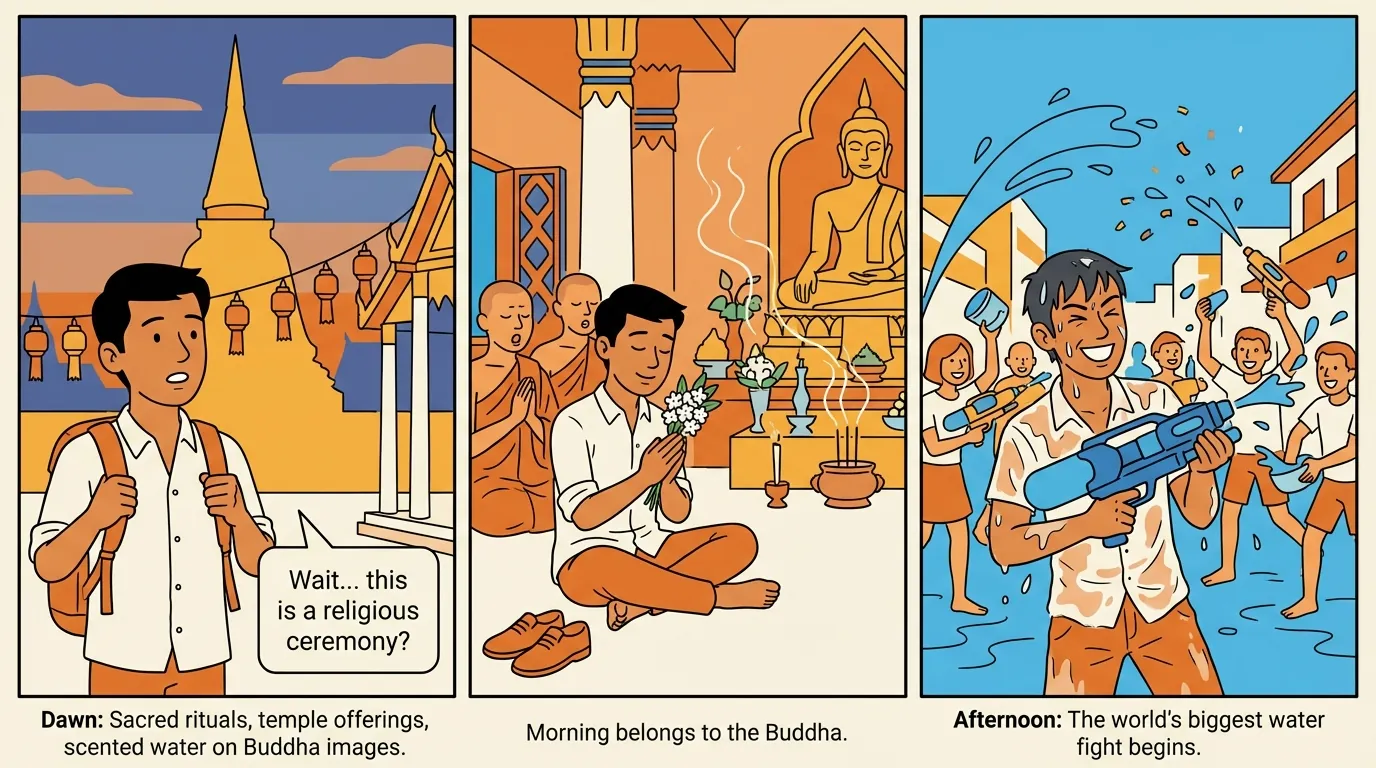
The water fight is joyful. The Buddha bathing is sacred.
The Elder Blessing Ritual That Most Tourists Never See
The Rod Nam Dam Hua ceremony happens inside family homes. Younger family members pour scented water gently over the hands of their elders. Not symbolic - deeply personal. Elders respond with blessings and words of wisdom for the year ahead. This private ritual reflects the Thai value of gratitude toward family and ancestors.
Most tourists never see this. It is not performed on the street. You will not find it on a tourist itinerary.
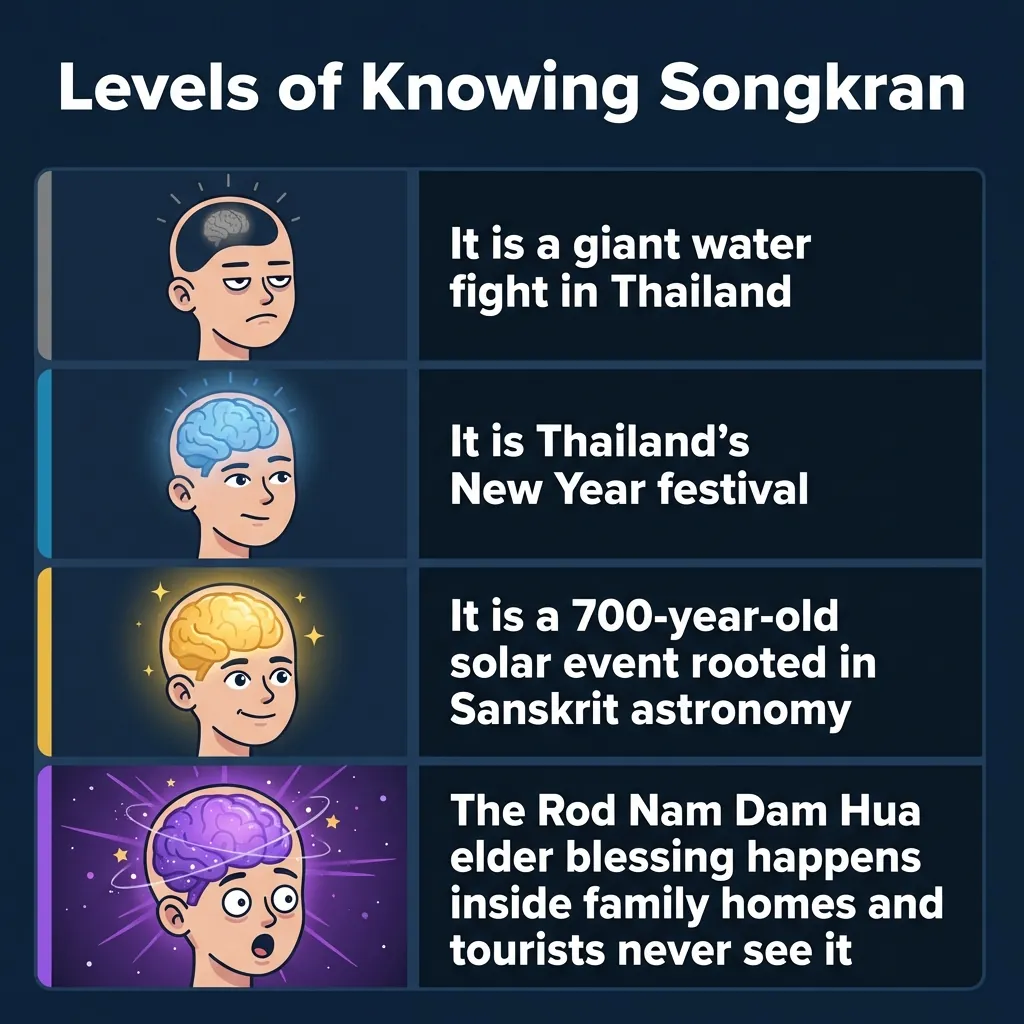
Knowing it exists changes how you see the water splashing outside. Every drop carries meaning.
Sand Pagodas and Merit-Making That Bring Good Fortune
Sand pagodas appear at temple grounds during Songkran. Families build them carefully from sand carried to the temple. The belief is that devotees carry temple sand away on their feet all year long. Songkran is the time to return it. Building a pagoda from that sand generates merit for the family.
Merit-making extends further. Thais release fish into rivers and birds into the sky. Offerings go to monks at dawn. Giving to those in need is considered especially powerful during this period.
These acts accumulate good karma for the year ahead.
How a Sacred New Year Became the World's Biggest Water Fight
The shift took time. Sacred intent and festive energy wove together across centuries.
From Gentle Water Blessings to Super Soakers on Silom Road
Original Songkran water splashing was quiet. A small bowl of scented water, poured carefully over someone's hands or shoulders. The gesture said: I bless you. I wish you renewal. Water as purification was always the bedrock.
Modern Songkran kept that bedrock and built something massive on top of it. Water cannons replaced small bowls. Foam machines showed up. Organized street battles pull hundreds of thousands of participants in Bangkok alone. The scale changed completely - the symbolism did not.
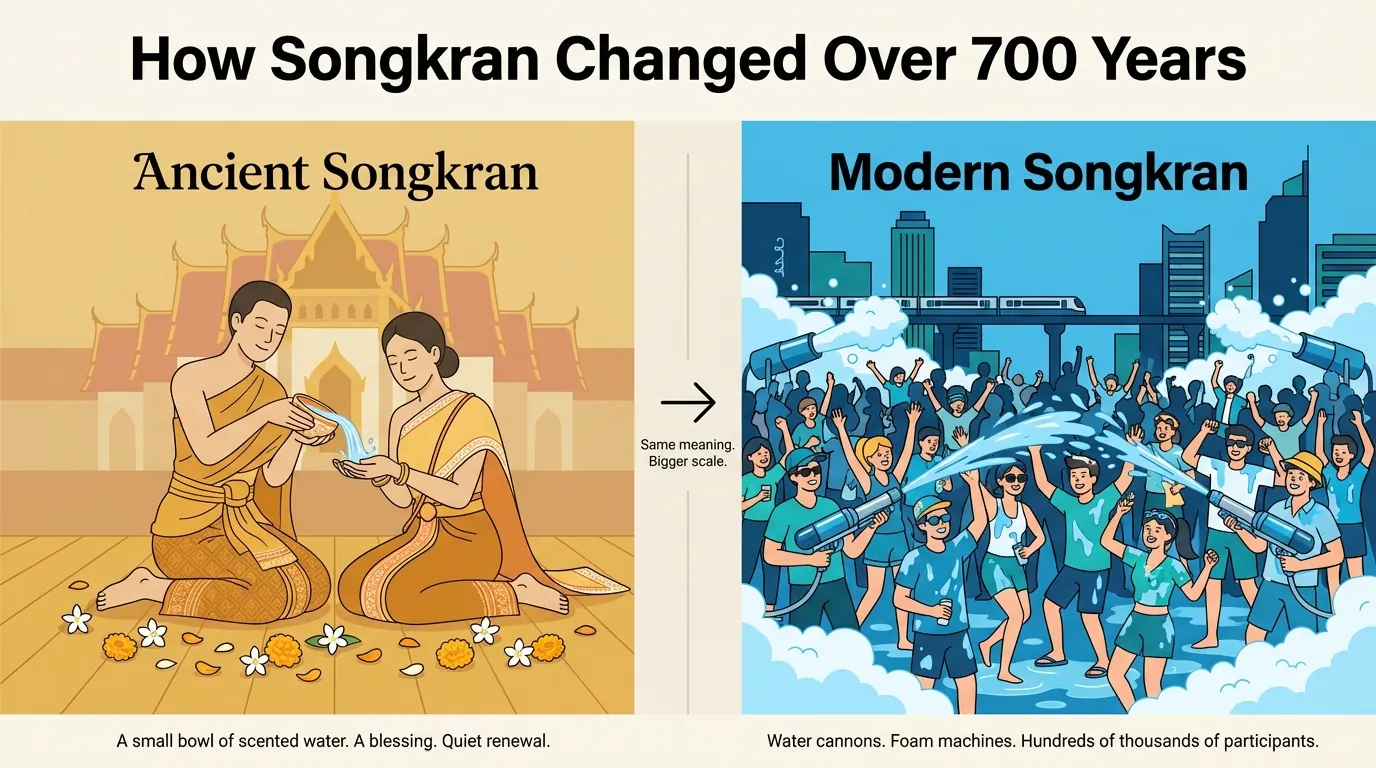
Wait. Strike that last bit.
Water still means renewal. Every drop, even from a super soaker.
The Numbers That Show Why Songkran Matters for Thailand
Thailand's Tourism Authority reports Songkran as one of the highest-traffic inbound tourism periods of the year. Millions of domestic travelers return to their hometowns at once. International tourists flood Bangkok, Chiang Mai, and Phuket at the same time. The result is a festival running at two scales simultaneously. Domestic Songkran is a family reunion. International Songkran is a global street party.
Both happen at once. Neither cancels the other out.
The economic weight is real. Hotels, transport, food vendors, and tour operators all post their strongest numbers during this stretch. Songkran reinforces Thai cultural identity while funding a substantial slice of the tourism economy.
The Best Places in Thailand to Experience Songkran in 2026
Not every Songkran celebration is created equal.
Chiang Mai Is Where Songkran Feels Most Like Its Ancient Self
Chiang Mai is where I'd send anyone who genuinely wants to understand Songkran, not just get through it. The ancient moat circling the Old City becomes the beating heart of the largest organized water fight outside Bangkok. Buddha images ride decorated floats through temple processions winding along the streets. Sand pagoda building draws crowds at Wat Phra Singh and other major temples. The rhythm here is slower than Bangkok's. A morning temple ceremony, an afternoon water fight - you get both without sacrificing one for the other. Chiang Mai holds both dimensions of Songkran at once.
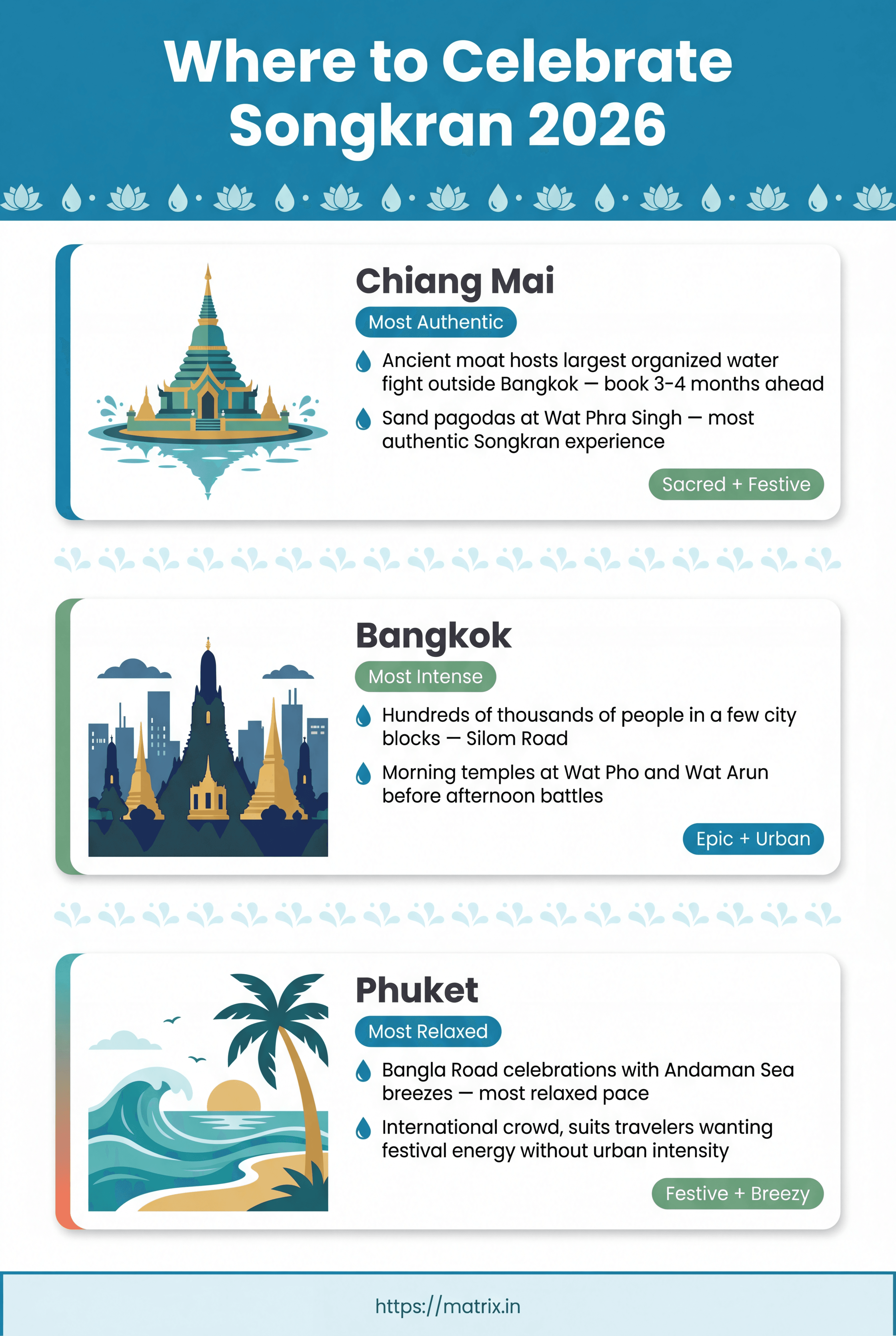
This is Songkran closest to its original form. Worth every extra hour on the road from Bangkok.
Chiang Mai fills fast. Book accommodation near the Old City moat three to four months out.
Bangkok Turns Silom Road Into the World's Wildest Street Party
Silom Road hosts Bangkok's most famous Songkran celebration. Hundreds of thousands of people compress into a few city blocks. Water cannons, music, foam, and organized chaos run from late morning until midnight. Khao San Road adds its own dimension - backpacker-festival energy with international crowds and relentless music. The scale hits you differently when you're standing inside it. Bangkok Songkran ranks among the largest street festivals on earth. Morning temple visits at Wat Pho and Wat Arun provide the sacred counterpoint before the afternoon battles take over. Going from dawn at Wat Pho to noon on Silom Road inside a single day is genuinely worth doing.
Bangkok rewards the traveler who wakes up early and stays out late.
Phuket Combines Beach Vibes With Songkran Water Celebrations
Phuket runs at a completely different frequency. Patong's Bangla Road carries the main celebrations wrapped in a beach-holiday atmosphere. Water fights blend with Andaman Sea breezes and sunset backdrops. The crowd skews more international than Chiang Mai or Bangkok. The pace stays relaxed enough to fit a beach morning and a water fight afternoon into the same day. Phuket suits travelers who want Songkran energy without the urban intensity.
What Indian Travelers Need to Know Before Joining the Festival
Songkran is joyful. Also genuinely chaotic. Preparation separates a great trip from a miserable one.
How to Protect Your Phone, Passport, and Sanity During Songkran
Waterproof pouches are non-negotiable. Water fight zones will drench everything - pockets, bags, shoes, all of it.
Leave your passport at the hotel. Leave non-waterproof electronics there too. Carry only a waterproof phone, your hotel card, and some cash in a sealed pouch. Thailand's roads see raised accident rates during Songkran every single year. Skip renting motorcycles on April 13 and 14. Grab or tuk-tuks are the smarter call.
Road safety is serious. The statistics are grim.
Cultural Etiquette That Will Make Locals Love You
Never splash water on monks. Never. Monks do not participate in the water fight, and splashing one is a genuine offense. Elderly people who are clearly not joining in should be left alone too. Dress modestly for morning temple visits - cover shoulders and knees before stepping into any sacred space. Water fight zones are public opt-in spaces. Respect anyone who is obviously sitting the whole thing out.
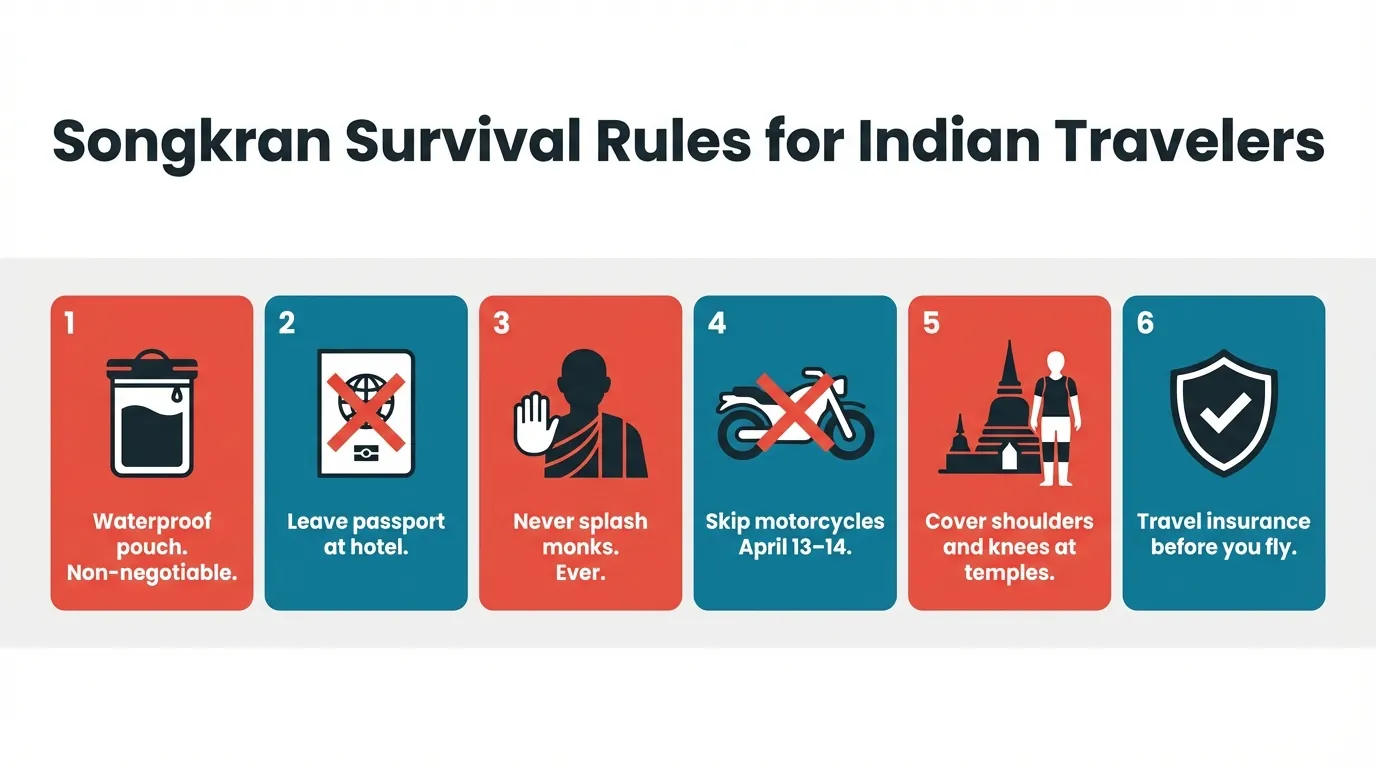
Thai hospitality is warm. Respecting these limits keeps it that way.
The Best Songkran Foods You Should Not Miss
Songkran doubles as a family reunion holiday across Thailand. Traditional Khao Chae - jasmine-scented rice served in chilled water - appears specifically during this period. Street food stalls multiply throughout the festival, drawing regional specialties from across the country. Sharing food with strangers is woven into the festival's spirit. If someone offers you food, accept it.
Buying international travel insurance for Thailand before you fly matters just as much as packing that waterproof pouch. Accidents happen. Medical costs abroad pile up fast. Songkran's raised road risk makes insurance a genuine necessity, not a nice-to-have. Store your policy details digitally in a cloud folder you can pull up from any device. Confirm your coverage includes adventure activities if you plan to rent any vehicle.
Go hungry to every street you walk down. You will not regret it.
How to Plan Your Trip to Thailand for Songkran Without the Stress
Songkran 2026 runs April 13 to 15. That's not much runway.
Book Accommodation and Flights at Least 3 Months Before Songkran
Hotels near Silom Road in Bangkok and the Old City in Chiang Mai fill up three to four months out. Flights from Indian cities to Bangkok start climbing sharply from late February, and Chiang Mai routes from Delhi and Mumbai follow the exact same curve. Lock in your accommodation first, then sort the flights. January bookings give you the strongest mix of availability and reasonable pricing for April travel.
January. Not March.
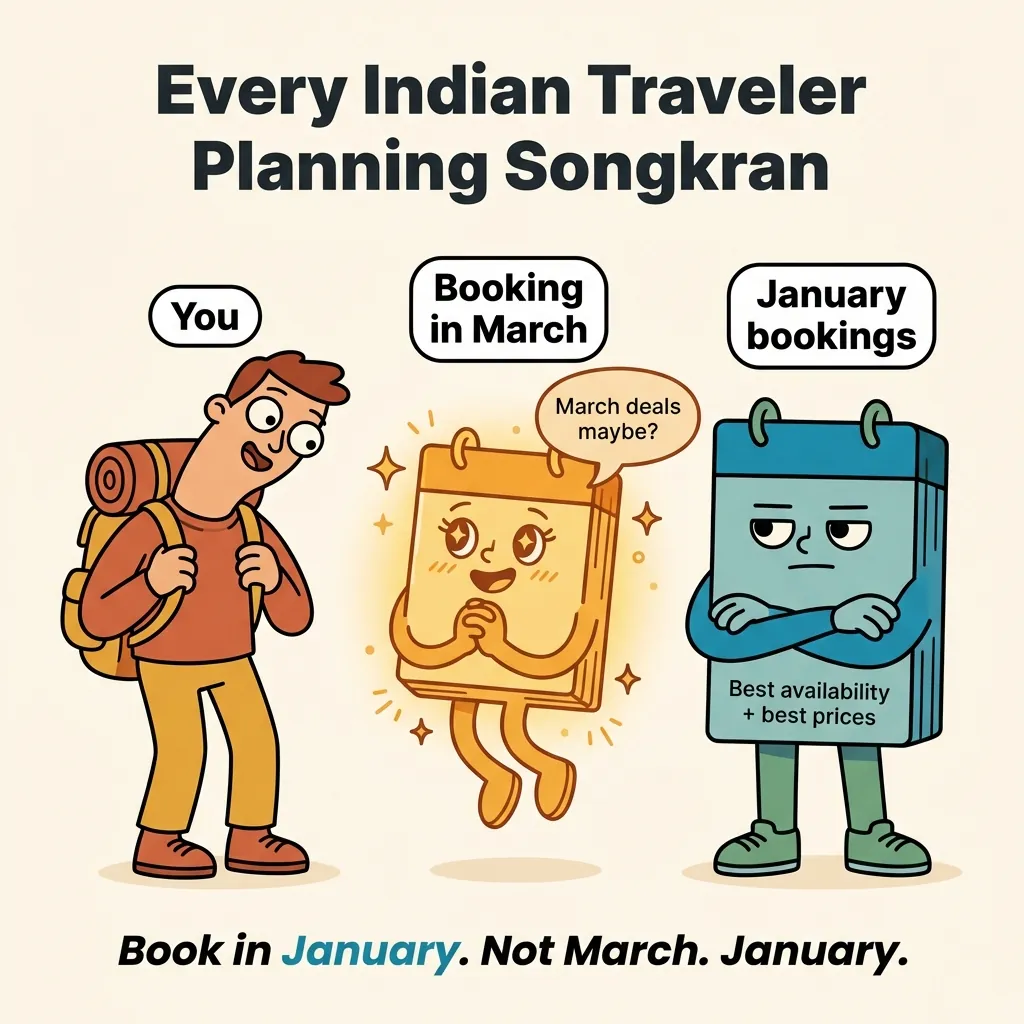
If you're reading this in February or March, check availability right now. Options exist, but your window shrinks with every passing week.
Stay Connected During Songkran Without Paying Roaming Rates
Reliable mobile data is non-negotiable during Songkran. Grab rides, Google Maps, crowd updates, messages back home, all of it depends on a working data connection. Order a Thailand eSIM for Indian travelers before your flight so you land ready to go, with full access to ride apps, navigation, and family updates without the bill shock. Indian carrier roaming in Thailand runs expensive and tends to get patchy in high-traffic festival zones.
Confirm your phone supports eSIM before purchasing. Most devices released after 2021 do.
Everything Else You Need Before You Board the Plane
Visa and Entry Requirements for Indian Travelers Heading to Thailand
Indian passport holders currently qualify for visa-free entry into Thailand for up to 60 days. This holds as of 2026, so confirm the current status on the Thai embassy website before you travel. Bring printed hotel bookings and your return flight ticket for immigration. Proof of sufficient funds may be requested at Suvarnabhumi Airport. Immigration queues during Songkran peak days run longer than usual, so factor in extra time.
Matrix covers travel insurance for Thailand alongside SIM and eSIM options, giving Indian travelers a complete pre-departure solution from a single provider. Bajaj Allianz General Insurance underwrites the policies, a name most Indian travelers already know. Coverage tiers go up to USD 500,000 for medical expenses. Senior citizen plans are available for travelers aged 61 to 70.
Why Travel Insurance Is Non-Negotiable for a Festival This Active
Songkran's raised road accident statistics make travel insurance a genuine necessity on this trip. Not optional. Thailand's roads on April 13 and 14 see some of the highest accident rates all year. Medical care in Thailand is solid, but without coverage the bills are brutal. A single hospital visit can run tens of thousands of rupees out of pocket. Order a Thailand prepaid SIM card for Indian travelers before flying, then pair it with travel insurance for Thailand as a complementary pre-departure essential. If your phone doesn't support eSIM, the prepaid SIM ships directly to your Indian address before departure.
Both reach you before you fly. Both activate the moment you land.
Matrix covers travel insurance for Thailand alongside SIM and eSIM options, giving Indian travelers a complete pre-departure solution from a single provider. Bajaj Allianz General Insurance underwrites the policies, a name most Indian travelers already know. Coverage tiers go up to USD 500,000 for medical expenses. Senior citizen plans are available for travelers aged 61 to 70.
Sorted before you board.
Conclusion
Songkran is unlike any festival you have attended before. Sacred yet joyful, ancient yet completely alive, it carries both dimensions without contradiction. Thai families have marked this Water Festival for over 700 years, with no signs of stopping.
Plan early.
- Book accommodation in January.
- Pack a waterproof pouch for your valuables.
- Respect the morning rituals before joining the afternoon water fights.
- Arrive with travel insurance and a working SIM so logistics never interrupt the experience.
- Indian travelers who prepare well will find Songkran genuinely unforgettable.
The water is coming whether you are ready or not. Be ready.
